 Skip to main content
Employee Transportation Service Options in NYC
A late shuttle can leave a whole team watching the clock before the workday starts.
1. New York Bus Company: Local corporate shuttle coverage across the Tri-State area
New York Bus Company business transportation services fit companies that need chauffeured group travel across the metro area. We serve Manhattan, Brooklyn, Queens, the Bronx, Staten Island, Long Island, and Northern New Jersey.
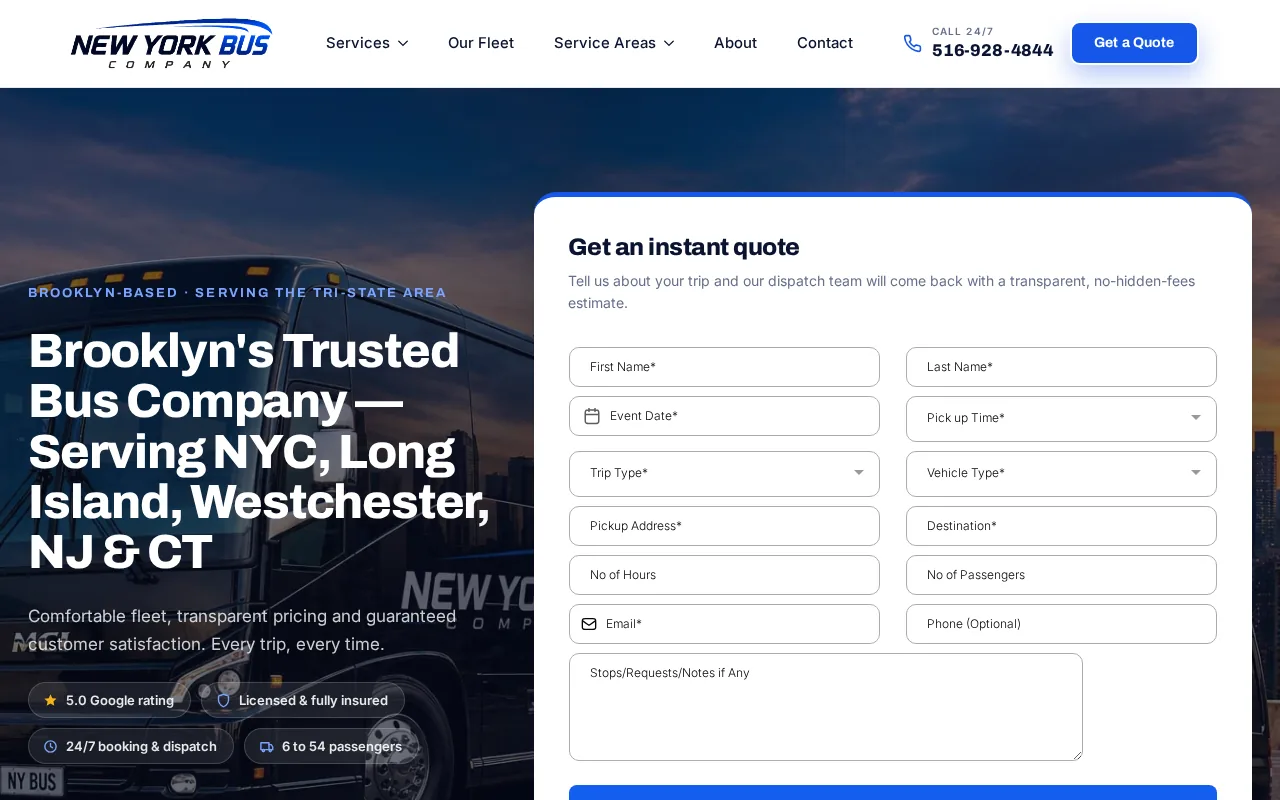
That reach matters when staff live in Garden City, Jersey City, Newark, or Westchester but report to one office. We can plan recurring employee routes, transit-hub connections, airport transfers, or one-day corporate movements around your work schedule.
Our fleet includes Mercedes Sprinter vans, executive Sprinter vans, minibuses, shuttle buses, and motor coaches. That gives planners room to match the vehicle to the group instead of sending a large coach down a tight city street.
We also serve JFK, LGA, EWR, Republic Airport, and Long Island MacArthur Airport. For airport staff or visiting teams, a direct group ride can reduce the need to track separate cab receipts.
The caveat is simple. Pricing depends on the destination, vehicle, service hours, stops, and date. Ask for a written quote with the full schedule before approval.
Alt: Chauffeured employee shuttle van outside a Manhattan office building.]
2. Academy Bus: Large fleet coverage for New York and New Jersey programs
Academy Bus suits organizations that value a very large operating base across New York and New Jersey. Its published materials describe late-model equipment, multiple bus types, trained operators, safety managers, driver retraining, and onboard camera systems.

Its fleet exceeds 1,100 buses, which may help with large commuter programs or a sudden need for added vehicles. Academy also runs commuter routes from New Jersey locations toward the Port Authority and Wall Street areas.
We would ask about vehicle assignment, backup coverage, sanitation routines, and the exact service plan before signing. A large fleet can support scale, but fleet size alone doesn’t tell you how the daily service path will feel for employees.
3. New York Charter Bus Company: Employee shuttles across NYC boroughs
New York Charter Bus Company is positioned for employee shuttles and corporate transportation across New York, including the five boroughs, Yonkers, Newark, and other statewide destinations.
The research profile describes a smaller 15-vehicle operation that focuses on passenger comfort. Listed amenities include Wi-Fi, power outlets, leather seats, climate control, and overhead storage. Those details may matter when staff need to answer email or prepare for a meeting during the ride.
The provider also promotes free, no-obligation quotes. We would still request the full service terms, including service-change rules, standby time, and cancellation terms.
4. DPV Transportation: Regional corporate shuttle coordination
DPV Transportation fits companies that need corporate employee shuttles across several states. Its listed service area includes New York City, Long Island, New Jersey, Connecticut, Massachusetts, and broader Northeast markets.
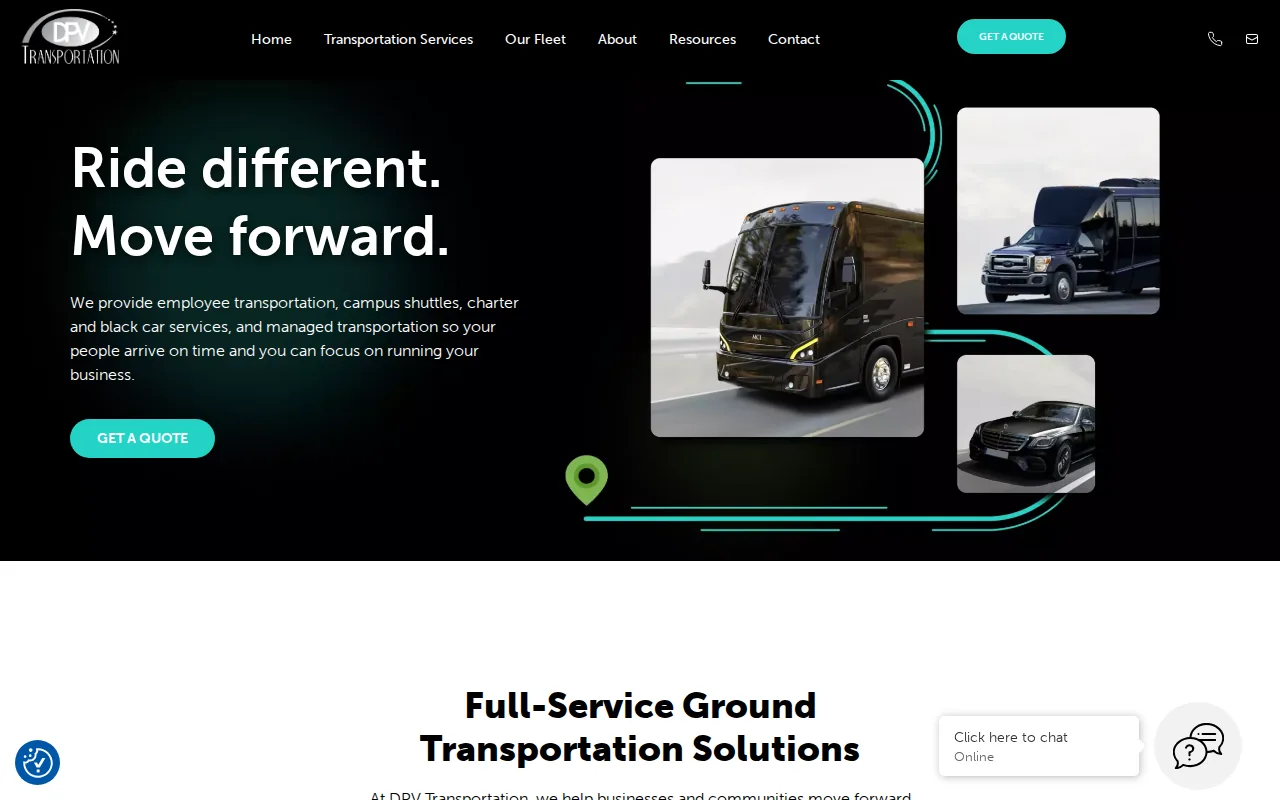
DPV describes last-mile routes between subway stations, Metro-North stops, commuter lots, and workplaces. Its materials also mention luxury vans, minibuses, charter buses, Wi-Fi, climate control, leather upholstery, GPS tracking, and live dispatch support.
That mix can work for a company with several sites or changing shift patterns. We would confirm the assigned vehicle, tracking access, emergency process, and dispatch contact before launch.
5. Corporate Campus Shuttle Operators: Fixed routes between offices and transit hubs
Corporate campus shuttle operators are a fit when employees need repeat service between offices, rail stations, parking areas, or separate buildings.
A fixed path is easier to budget and explain than a daily patchwork of individual rides. It can also support an office in a place such as Melville, White Plains, Secaucus, or Jersey City when the nearest station sits away from the worksite.
Before booking, we would map each stop against shift times. A delivery path with too many stops may look helpful but arrive late. A delivery path with too few stops may leave employees driving to the pickup point.
6. Airport Employee Shuttle Providers: Staff routes to JFK, LGA, and EWR
Airport employee shuttle providers focus on staff movements around JFK, LaGuardia Airport, and Newark Liberty International Airport. This model works for airline teams, airport contractors, hotel staff, and groups arriving for a business event. For larger teams traveling through these airports, group airport transportation in NYC can help planners compare vehicle types and transfer arrangements.
We recommend separating employee routes from visitor transfers when shift times differ. For JFK, public transit links include subway and other rail connections, but a private shuttle may help when staff carry work gear or report outside normal transit patterns.
Build buffer time into the plan. Airport roads can change quickly, especially during peak arrival periods.
7. Long-Term Recurring Shuttle Programs: Scheduled employee commuting
Long-term recurring shuttle programs suit employers that need service every weekday or across several shifts. The provider manages a designated path while the company reviews ridership and adjusts stops over time.
Research on recurring programs points to several useful controls: live vehicle maps, arrival alerts, trip-level cost tracking, utilization reports, and on-time records. These tools help a transport manager see if a stop is underused or if a shift needs another departure.
Recurring service can also replace scattered mileage claims or parking support in some workplaces. We would compare the full program cost against current travel reimbursements, parking payments, missed-shift coverage, and staff time spent managing vendors.
8. Executive Sprinter and Minibus Providers: Smaller teams and multi-stop travel
Executive Sprinter and minibus providers fit smaller teams that need several stops in one day. This may include site visits between Manhattan and Long Island, executive meetings in Newark, or a group moving between a hotel and office.
Smaller vehicles can make more sense on narrow streets or when the group size changes by stop. We would confirm the passenger capacity, luggage space, climate control, and whether the vehicle has the amenities your staff expect.
For a 56-person event, a motor coach may be more efficient. For a small leadership group, a Sprinter van can keep the schedule easier to manage.
9. Technology-Enabled Shuttle Platforms: Tracking, reservations, and roster tools
Technology-enabled shuttle platforms add a digital layer to an employee transportation service. They may include rider booking, seat reservations, live ETAs, automated rosters, driver navigation, and admin dashboards.
Some systems let employees submit late-shift requests or update approved travel needs. Others support GPS tracking, role-based access, boarding checks, and emergency alerts. These functions can reduce spreadsheet work, but only when the company sets clear approval rules.
We would ask who owns the data, how access is limited, and what happens when an employee misses a pickup. A polished app can’t fix weak delivery scheduling.
10. Multi-Modal Mobility Programs: Shuttle, rideshare, and cab coordination
Multi-modal mobility programs combine shuttle service with rideshare or cab trips. They can help when a fixed transit corridor serves the main group but a few employees work late or live outside the normal pickup area.
The useful question is cost per completed trip, not the number of transport modes. If a late-shift cab request becomes common, a second shuttle departure may cost less and give staff a clearer routine.
We would also set rules for approvals, receipts, employee safety, and after-hours support. Keep those rules in writing.
Compare Employee Transportation Service Options
These options solve different problems. The right fit depends on delivery area size, coverage, shift design, and how much work your team wants to keep in-house.
| Option | Best fit | Key strength | Watch for |
|---|---|---|---|
| New York Bus Company | Tri-State corporate programs | Chauffeured vans, minibuses, shuttles, and coaches across the region | Request a location-specific quote |
| Academy Bus | Large New York and New Jersey programs | Fleet scale and formal safety programs | Confirm assigned vehicle and comfort details |
| New York Charter Bus Company | Comfort-focused employee routes | Wi-Fi, power outlets, leather chairs, and climate control | Confirm fleet availability for recurring service |
| DPV Transportation | Regional corporate shuttle networks | Location tracking, live dispatch, and multi-state coverage | Confirm tracking access and emergency procedures |
| Campus shuttle category | Office-to-transit connections | Repeat routes with simple rider patterns | Review stop use and shift changes |
| Technology platform category | Large, changing rosters | Booking, alerts, tracking, and reports | Check data access and staff adoption |
We use location tracking as one part of the review, not as proof that a service is safe by itself. Location tracking can show a vehicle’s position, but it does not by itself establish service safety.
What to Check Before Booking an Employee Shuttle
Start with a pickup schedule that lists pickup points, shift times, passenger counts, office addresses, and backup contacts. Then ask each provider for the same quote format so procurement can compare like with like.
- Confirm licensing, insurance, driver screening, and safety training.
- Ask how vehicles are cleaned between scheduled runs.
- Check seat belts, climate control, luggage space, and charging access.
- Request a plan for traffic delays, vehicle failure, and severe weather.
- Ask how delivery path changes affect the quote.
- Review rider privacy, app permissions, and emergency escalation.
For airport connections, check terminal pickup rules and baggage needs. JFK notes that public transit connections are available, but a private staff shuttle may still fit a shift-based schedule better.
FAQ
What is an employee transportation service?
An employee transportation service moves workers between homes, transit hubs, offices, campuses, airports, or work sites on an agreed schedule. It may use a shuttle bus, minibus, Sprinter van, motor coach, cab, or rideshare. Companies can book a single journey or arrange a recurring program for daily commuting and shift coverage.
How much does an employee shuttle cost in NYC?
An employee shuttle’s cost depends on the vehicle, distance traveled, number of stops, service hours, passenger count, date, and traffic plan. Many providers quote after reviewing the itinerary. Ask for a written total that states fuel, tolls, parking, standby time, extra stops, and cancellation terms.
Can an employee shuttle serve Long Island and New Jersey?
Yes, an employee shuttle can connect NYC offices with Long Island and Northern New Jersey when the provider covers those areas. New York Bus Company serves locations such as Garden City, Melville, Newark, Jersey City, Hoboken, Secaucus, and nearby communities. The quote should list each stop and the planned service window.
What safety checks should a company ask about?
Companies should ask about driver licensing, background checks, training, insurance, vehicle inspections, dispatch coverage, and emergency response. We also recommend asking how late-night drop-offs are handled and how staff can report a problem. A live map helps with visibility, but it should support a clear safety process.
Do employees need a shuttle app?
Employees don’t always need an app, but a shuttle app can help with live ETAs, pickup alerts, seat requests, and schedule changes. It is most useful when schedules change often or when many vendors share one program. For a simple fixed service path, email notices and a clear stop list may be enough.
Conclusion
For a corporate transportation plan across NYC, Long Island, or Northern New Jersey, we recommend starting with New York Bus Company and comparing the quote against your current commute costs. Send us your employee count, stops, shift times, vehicle needs, and service dates so we can build a service plan for review.
