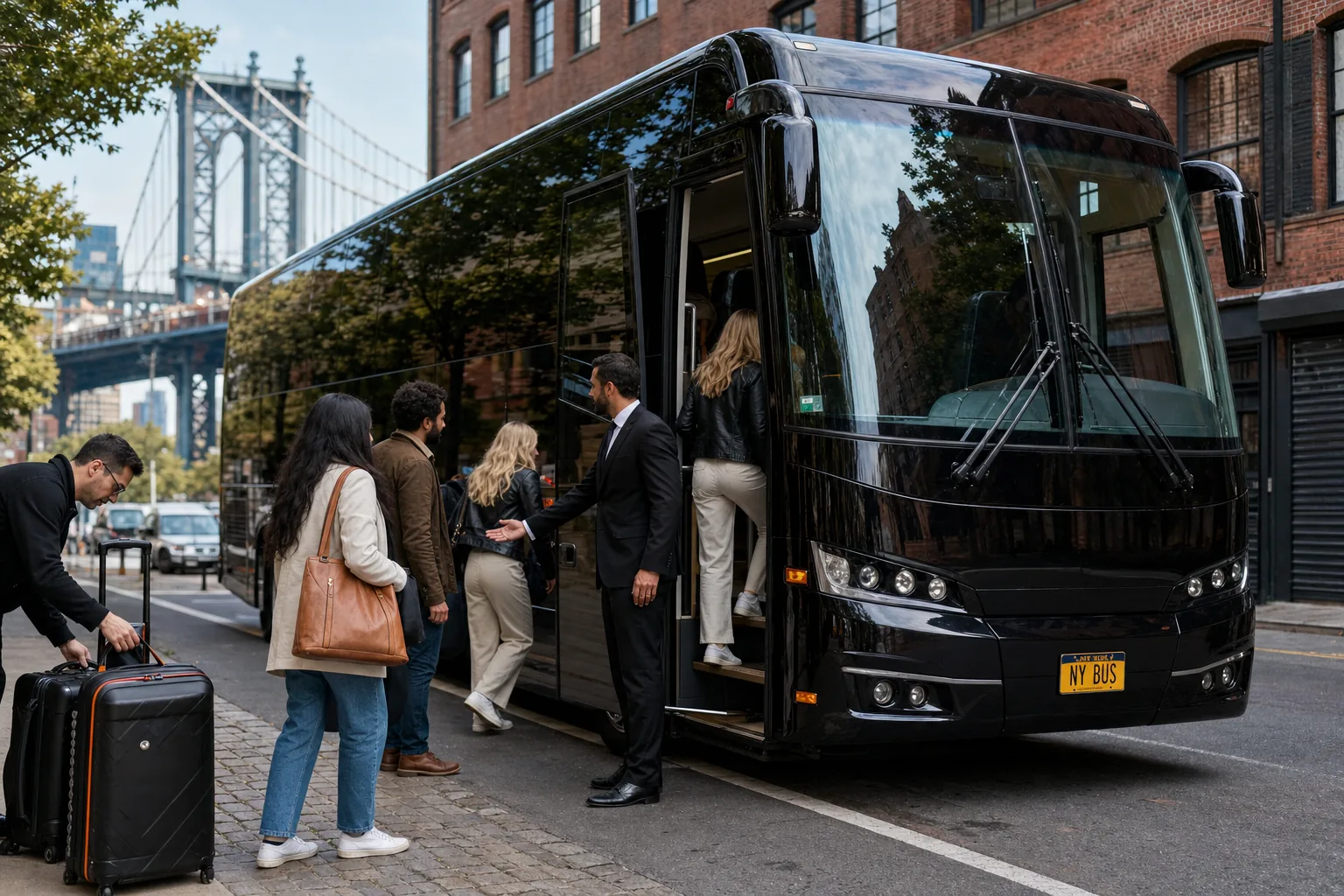
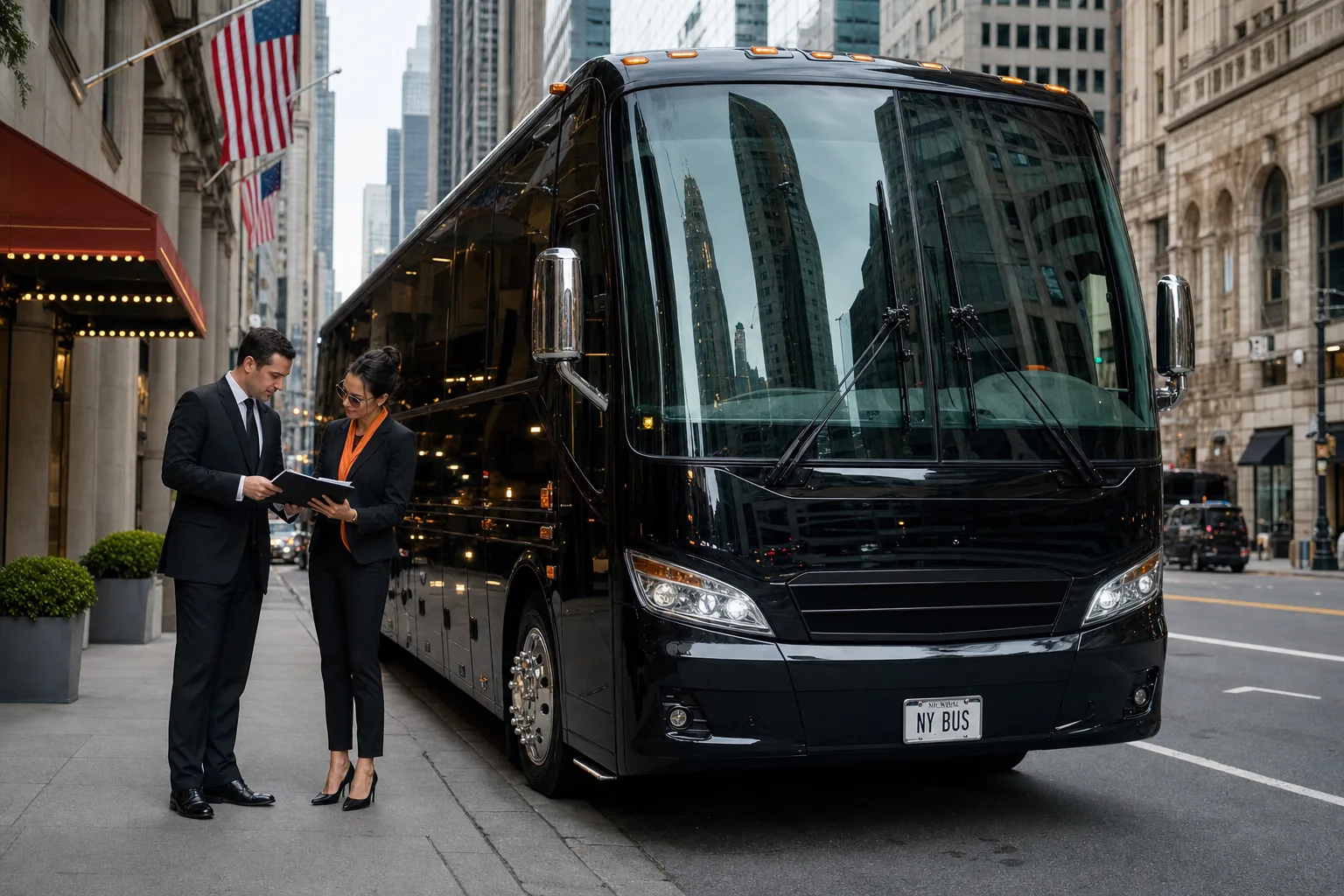
A group trip in New York can include airport arrivals, busy curbside pickups, and several stops across the region. A motor coach rental keeps passengers on one schedule, but the right plan starts with your headcount and route.
An analysis of 47 YouTube comments about motor coach rental found that 28% mentioned specific interior amenities.
We’ll walk through the key steps, from choosing a vehicle size to checking the written trip terms, so you can book with fewer loose ends.
Step 1: Define Your Group Size and Trip Requirements
Start with a firm passenger count, then note what the group needs to bring and do during the trip. Those details help us match the vehicle to the day, rather than choosing by seat count alone.
Count every traveler, including staff, chaperones, children, and guests who may join for only part of the itinerary. If attendance is still changing, share the likely range and the date when you expect a final count. Ask the provider to confirm the assigned coach’s seat count before you accept the quote.
Next, list luggage and trip gear. Airport passengers may have suitcases, while a school or sports group may bring bags or equipment. Ask how much storage the proposed vehicle has and whether the group’s items can fit without taking passenger space. Don’t assume every motor coach has the same layout.
Think through the ride itself, too. Is the trip a short transfer between a hotel and an event, a full day with several pickups, or a multi-day excursion? A full-size motor coach is commonly described as seating 36 to 56 passengers, but the exact configuration varies. New York Bus Company has motor coaches that seat up to 54, along with minibuses and shuttle buses. We can discuss which vehicle type fits the trip.
A motor coach is a chauffeured bus for group travel. It’s different from a recreational vehicle, such as a Class A or Class C motorhome, which people rent for self-directed travel. For a group headed to an event, focus on passenger seating, luggage space, pickup access, and the service schedule.
Trip detail
What to write down
Question for the provider
Passenger count
Confirmed count and likely changes
How many seats are in the assigned coach?
Luggage or gear
Bag count and bulky items
Where will these items go during the ride?
Trip length
Transfer, full day, or multiple days
How is service time counted?
Trip purpose
Conference, wedding, school trip, or tour
What vehicle type fits this itinerary?
Before you book, plan to look up the operator in the FMCSA’s public carrier records, covered in Step 4.
Key Takeaway: Share the headcount, luggage needs, trip length, and purpose before asking for a quote.
Step 2: Map the Route, Stops, and Pickup Locations
Build the route in the order passengers will travel it. Include every pickup, wait, stop, and drop-off, even if a stop seems brief. A quote based on one destination can change when the itinerary adds several addresses or a long wait.
For a Manhattan event, write down the exact hotel entrance or meeting point, not only the neighborhood. Then confirm where the group can gather without blocking the sidewalk. At an airport, name the terminal or agreed meeting area and explain whether the group is arriving together or on separate flights. Airport pickup rules and access can differ by location, so ask the operator to review the plan with you.
New York traffic can make a tight schedule hard to hold. Allow room for loading and unloading, especially when passengers need time to gather bags or check a headcount. For a conference shuttle, set a clear departure time at each stop and name one person who can confirm when the group is ready. For a wedding, coordinate hotel departures with the ceremony and reception schedule.
Write the route as a simple sequence: pickup address, planned departure, next stop, wait time, and final drop-off. Mark any time-sensitive parts, such as a flight departure or scheduled event entry. Share the complete route with the provider before the quote is finalized, then ask how changes will be handled.
For an event with more than one venue, sketch each passenger movement separately. Guests might travel from a hotel to a ceremony, then to a reception. Staff or vendors may need a different pickup window. A clear plan helps avoid assuming that every passenger follows the same schedule. For recurring corporate trips, list each service day and the pickup pattern.
We serve New York City, Long Island, and Northern New Jersey. A route might begin in Brooklyn, include a pickup in Queens, then continue to a venue in Nassau County. If your group needs transportation for an event, our New York event transportation services page covers group travel options for those schedules.
Also ask about one-way or out-of-area travel if your trip crosses state lines or ends far from its starting point. Don’t assume a return trip is built into a one-way plan. Put the final drop-off address and expected end time in writing so the quote reflects the service you need.
Step 3: Request a Detailed Quote and Compare What It Covers
Send the same trip details to each provider you’re considering. That gives you a fair basis for comparing quotes. Include the travel date, passenger count, pickup and drop-off addresses, stop sequence, service hours, and luggage needs.
Ask for a written quote tied to the exact itinerary. The total can depend on vehicle type, trip duration, and distance. The day of the week and season may also affect availability and the quoted amount. For a multi-day trip, ask how overnight service is priced and whether the driver’s rest arrangements affect the plan.
Read the full quote, not only the total. Ask whether tolls, parking, fuel-related charges, waiting time, extra hours, or driver gratuity are included or billed separately. These items may depend on the trip and the provider’s terms. Get the answer in writing before you compare totals.
A quote should state the vehicle type, service window, itinerary, passenger count, and payment schedule. It should also explain the deposit, balance due date, cancellation terms, and the process for changing trip details. If an item is unclear, ask for an updated version rather than relying on a verbal promise.
Compare what each price covers. One quote may include a longer service window, while another may include only the planned driving period. Check whether the bus waits at a venue or leaves and returns later. For a long-distance or overnight trip, confirm how the schedule accounts for required driver rest.
Our pricing depends on vehicle type, trip duration, and distance, and we quote single-day and multi-day trips with no hidden fees. We recommend giving dispatch the full itinerary so the estimate reflects the plan, not a rough outline.
If cost planning is a key part of your decision, our charter bus rental cost guide explains the details that can shape a New York group quote. Use it as a checklist, then compare written estimates for the same route and time frame.
Pro Tip: Ask each provider to quote the same pickup times and stop durations. A lower total may cover less service time.
Step 4: Check the Operator, Insurance, and Trip Terms
Before paying a deposit, confirm who will operate the trip and what the contract says. Ask for the operator’s legal business name and verify that the company has the authority and insurance needed for the service. Make sure the contract names the service provider, not only a booking contact.
The FMCSA’s public carrier records let you look up an interstate passenger carrier’s registration and safety details. Search by the company name, USDOT number or other identifying details to check that the record matches the operator you plan to hire. If a broker or booking service arranged the quote, ask which carrier will supply the vehicle and driver.
New York Bus Company is licensed and insured. Our drivers are professionally trained, licensed, and vetted, and every vehicle is regularly inspected and maintained. Ask us to confirm the details that apply to your trip and the assigned vehicle.
Read the contract for cancellation deadlines, deposit rules, added-hour terms, and changes to passenger count. Check what happens if the itinerary changes because of weather, a delayed flight, or a venue schedule shift. Don’t rely on a general promise when the written terms can spell out the process.
Ask how driver credentials fit the vehicle and trip. For a large commercial passenger vehicle, confirm the operator will assign a properly qualified driver. Commercial driving rules set limits on driving and work time, which can affect a long itinerary. Ask how breaks or a second driver may affect your schedule.
Also confirm who handles a service issue on the day of travel. Get a dispatch or trip contact through the company’s approved booking channels, and ask how the driver receives the final itinerary. You don’t need to settle every possible disruption in advance, but you should know the process for reporting a change or delay.
Step 5: Coordinate Passenger Details and Special Trip Logistics
Once the route and vehicle are set, give passengers clear instructions. Tell them the pickup address, the time they should arrive, and what to do if they’re running late. Name one trip lead who can confirm the group is ready to board and share updates with the driver or dispatch.
For airport travel, collect flight details and sort passengers by arrival time. A group arriving on different flights may need more than one pickup window. Share the airport, terminal information, and luggage expectations with the provider. For a departure, set a boarding time that leaves room to gather everyone before the scheduled drive.
New York Bus Company provides group transportation to and from JFK, LaGuardia, and Newark Liberty International Airport. If your itinerary centers on a flight, our group airport transportation information can help you think through the vehicle and pickup plan. Share the confirmed flight schedule when you have it.
For school groups, assign adult leaders to passenger sections or boarding groups. Keep a current roster with the trip lead, and agree on a headcount process at each stop. For a corporate event, tell attendees whether the bus is a shared shuttle or a reserved group transfer. That simple distinction can prevent missed pickups.
For a wedding, share the hotel departure time with guests before the event day. Allow a clear boarding window, then confirm where the bus will meet the group after the reception. If guests will leave at different times, decide whether the schedule includes another shuttle run or a separate vehicle before booking.
Ask the provider how to share changes once the trip is confirmed. Keep one final itinerary rather than sending several competing versions. If a pickup address or departure time changes, have one person send the update to the operator and the passenger group.
Before the trip, tell the company about any passenger needs that affect boarding, seating, or timing. Ask what the assigned vehicle can support, and get the answer before the travel date. Clear details help the provider make an accurate plan and help passengers know what to expect.
Step 6: Confirm the Reservation and Prepare for Travel Day
After you accept the quote, get a written confirmation with the final itinerary and payment terms. Check the date, pickup address, service start and end times, vehicle type, and passenger count. Make sure the confirmation reflects every stop you agreed to.
Save the contract and the company’s approved trip contact details where the trip lead can reach them. Ask when the operator will reconfirm the schedule and how you’ll receive any driver or vehicle assignment information. If a detail changes, request an updated confirmation so everyone works from the same plan.
Set a passenger meeting time before the bus is due to depart. That gives your trip lead time to check attendance and load belongings. Tell travelers whether they should wait at a specific entrance or gather at a nearby meeting point. Avoid changing the pickup location through informal messages that may not reach the driver.
On the day, keep the group together and follow the boarding plan. The trip lead should have the roster, the final itinerary, and a way to contact the operator. Ask passengers to label their bags if several people have similar luggage, then confirm the group count before leaving each stop.
For a multi-day trip, review the next day’s pickup time with passengers before the group disperses. Confirm any planned schedule update with the operator, not only with the group. This is especially helpful when a tour includes several stops or an overnight stay.
We offer flexible scheduling and dispatch support for trip planning. We suggest confirming your final pickup details well before the travel date, then checking that the trip lead and provider share the same version of the itinerary.
Frequently Asked Questions
How many people can a motor coach hold?
A full-size motor coach is commonly described as seating about 36 to 56 passengers, but the exact count depends on the vehicle. New York Bus Company’s motor coaches seat up to 54 passengers. Ask the provider to confirm the assigned coach’s seat count, then include luggage and equipment when you assess the fit.
What details do I need for a motor coach rental quote?
Provide the trip date, passenger count, pickup and drop-off addresses, stop sequence, and expected service hours. Add luggage needs and explain whether the trip is a transfer, event shuttle, or multi-day route. A complete itinerary helps the provider quote the planned service rather than a partial version.
What affects the cost of a charter bus trip?
Vehicle type, trip duration, and distance can affect the quote. The schedule, date, and number of stops may also shape the service plan. Ask whether tolls, parking, waiting time, extra hours, or other trip charges are included. Compare written quotes for the same itinerary, not just the headline total.
Should we rent a motor coach instead of an RV?
Choose a motor coach when your group needs a professional driver and shared transportation on a set itinerary. An RV is generally rented for self-directed travel, where the renter drives and manages the route. For an event or airport transfer in New York, compare the group’s headcount and schedule with the service each vehicle type provides.
Can a coach pick up a group at an airport?
Yes, group airport transportation can be arranged, but the pickup plan needs clear details. Share the airport and terminal, flight schedule, passenger count, and luggage needs. If travelers arrive on separate flights, ask whether the plan should use more than one pickup window. Confirm the meeting point with the operator before travel day.
Conclusion
Choose the vehicle after you’ve confirmed the headcount, luggage, and full route. Then request a written quote and check the operator and trip terms before paying a deposit. New York Bus Company can help you plan group transportation across New York City, Long Island, and Northern New Jersey. Start by sending the complete itinerary for a clear estimate.
Coordinating a company trip across New York gets tricky when people arrive at different times or from different places. We’ve put together three provider options plus New York Bus Company,…
Wedding guest travel in New York often means moving people between hotels, ceremony sites, receptions, and after-parties. The right wedding bus service in New York depends on your group size,…
Moving a group around New York takes more than finding a vehicle with enough seats. The right fit depends on your route, schedule, and whether you need one trip or…
 Skip to main content