 Skip to main content
Corporate Shuttle Service Options in New York
A corporate shuttle service can mean a daily employee route, a one-day event bus, or a fixed public shuttle. The right fit depends on your group size, route, schedule, and need for a private vehicle. Here are three named options, followed by a comparison and a buyer checklist for New York, Long Island, and Northern New Jersey.
1. New York Bus Company
New York Bus Company provides private group transportation across New York City, Long Island, and Northern New Jersey. It fits employers that need one transportation plan for executive teams, employee routes, conferences, airport transfers, or multi-stop events.
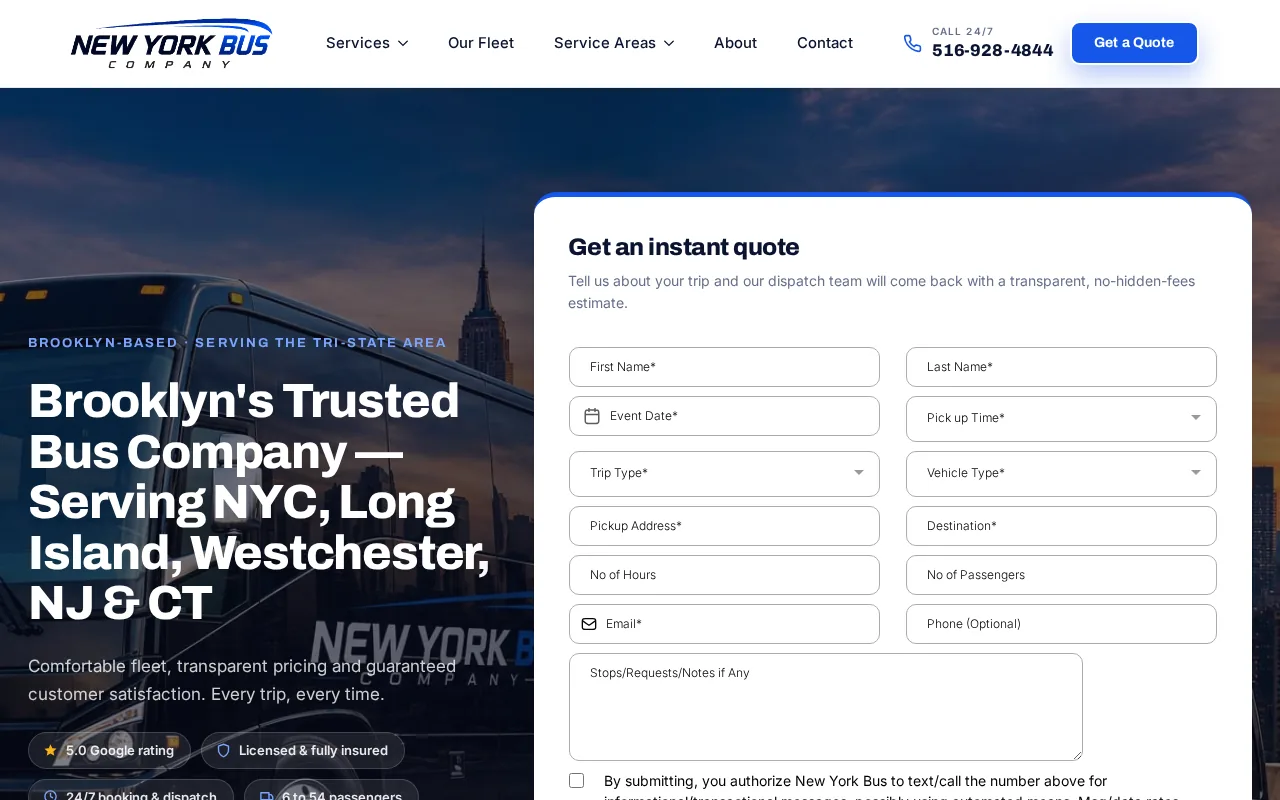
The fleet includes luxury Mercedes Sprinter Vans, Executive Sprinter Vans, Mini Buses, Shuttle Buses, Motor Coaches, sedans, and SUVs. That range matters when a six-person leadership team needs a different vehicle than a 56-person conference group. Instead of forcing every trip into one bus size, planners can match the vehicle to the headcount and route.
Coverage includes all five boroughs, Nassau County, Suffolk County, and Northern New Jersey communities such as Newark, Jersey City, Hoboken, Secaucus, Fort Lee, Paramus, and Teaneck. That makes the service useful for companies with offices on both sides of the Hudson or with staff traveling from Long Island into Manhattan.
New York Bus Company also serves major airports and business hubs. Common trip plans may connect a group with John F. Kennedy International Airport, LaGuardia Airport, Newark Liberty International Airport, Republic Airport, or Long Island MacArthur Airport. A planner can also build a route between a hotel, convention center, office, and event venue.
For daily commuting, a route might collect staff in Brooklyn before reaching a Manhattan office. A Long Island plan might connect Garden City, Mineola, or Melville with a workplace. A Northern New Jersey route could gather passengers in Jersey City, Hoboken, or Newark before crossing into New York.
The business context lists air-conditioning, on-demand Wi-Fi, comfortable seating, and surveillance cameras for its shuttle bus services. Vehicles are maintained and operated by licensed chauffeurs, and the company states that it is fully licensed and insured.
Pricing is quote-based. That is useful when the trip has several pickup points, a long standby period, or a vehicle change during the day. Ask for the full scope in writing, including route, passenger count, vehicle type, pickup windows, wait time, and any parking or toll terms.
Its main limit is service area. New York Bus Company focuses on the New York, Long Island, and Northern New Jersey metro region. It may not fit a company that needs a regular route far outside that area.
For a recurring commuter plan, review the company’s employee transportation and shuttle services page. For a single conference or meeting, a private quote gives the planner more control than a public event shuttle.
2. U.S. Open Express Shuttle: Event-day commuter access from Calverton
The U.S. Open Express Shuttle is an event-specific option tied to the BLUE LOT at Calverton Airfield. It suits people traveling to the event during peak morning commuter hours, rather than employers building a private shuttle program.
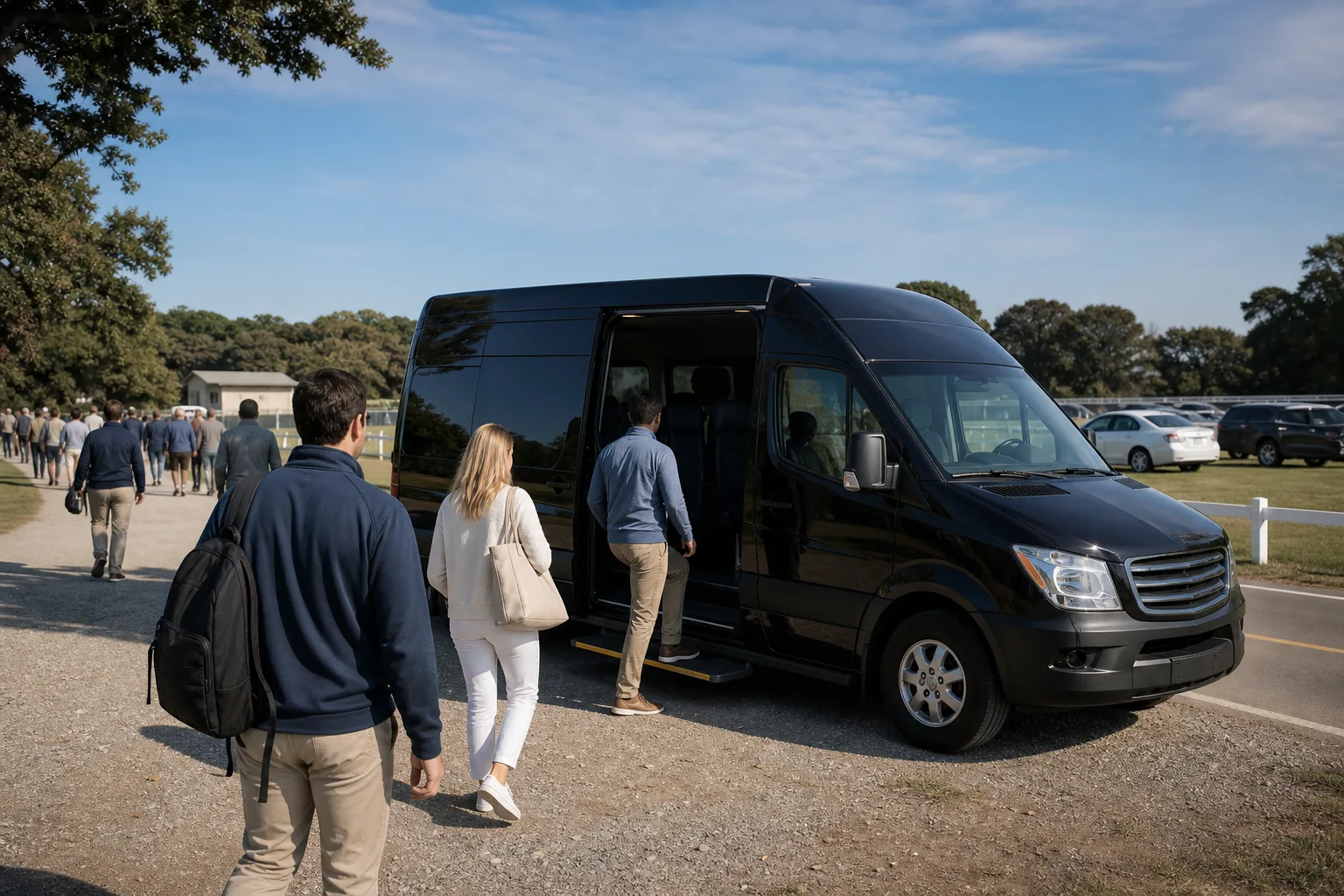
The main appeal is cost structure. The shuttle is complimentary, so an event attendee does not need to arrange a separate charter vehicle for that connection. The service also has an expedited bus lane during peak morning commuter hours, which can help the event route move more smoothly when traffic builds.
The route is narrow by design. It begins with access from a named lot at Calverton Airfield and supports a specific event trip. It does not replace a private employee shuttle between offices, neighborhoods, airports, or hotels.
That distinction matters for corporate planners. Suppose a company has staff coming from Mineola, White Plains, and Jersey City. A single event shuttle from Calverton won’t solve those separate pickup needs. The planner would still need to arrange transportation to the lot or use a private provider.
The BLUE LOT service has event-day operating details. Check the current event instructions before assigning staff to the route. Event transportation can change with venue access rules, match schedules, and traffic controls.
There is no stated vehicle menu for a company to select from, and the service is not presented as a custom charter. That makes it easy to use for the event purpose but less useful for a business that needs a private group vehicle.
Use this option when the event route is the actual destination. For a private meeting, office commute, airport group, or company retreat, compare a charter quote instead.
One more point: a complimentary public shuttle may still involve walking, parking, waiting, or a set boarding process. Give employees clear instructions about where to meet and when to arrive. A company should not assume that an event shuttle will collect people at each employee’s home or office.
3. Hampton Jitney: East End routes for company events
Hampton Jitney is a scheduled coach option for East End travel. It fits companies whose staff or guests already need service near Montauk, Amagansett, East Hampton, Sag Harbor, Bridgehampton, Water Mill, or Southampton.
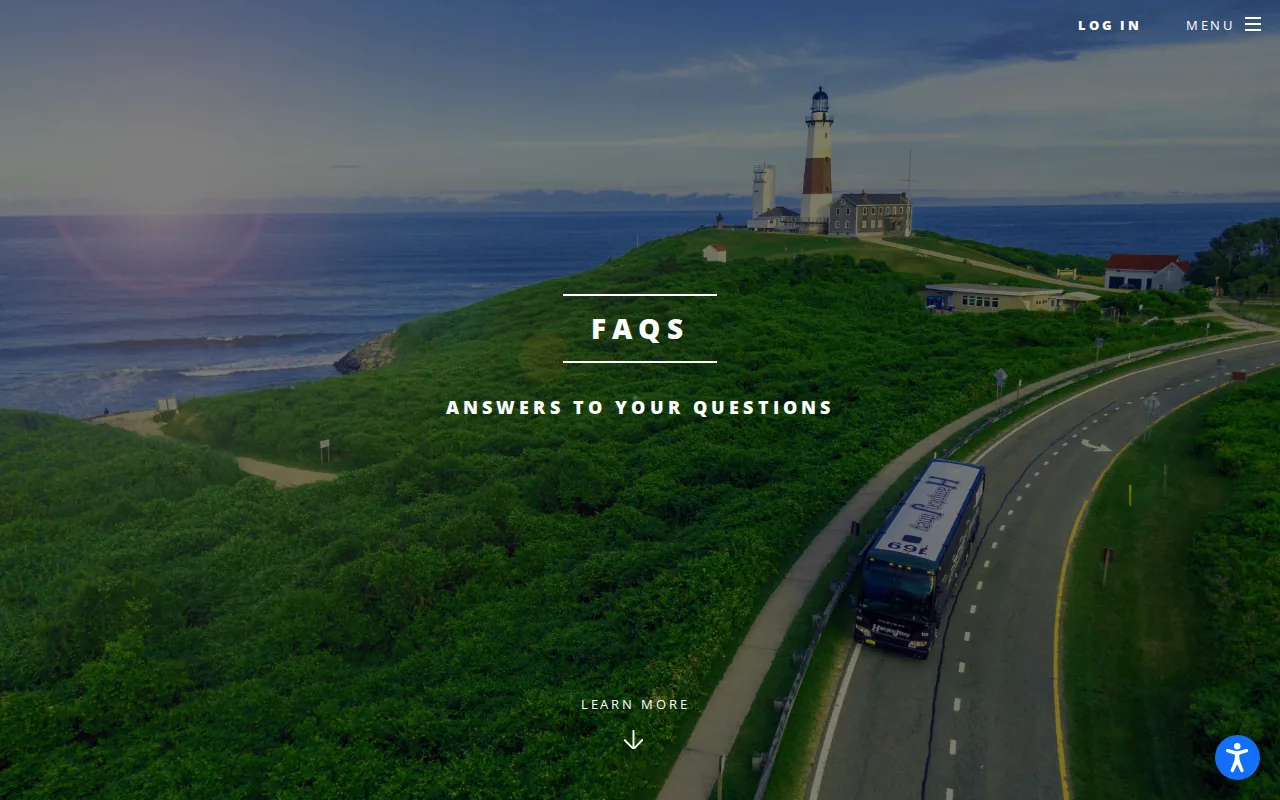
Its route coverage gives it a clear use case for a company event in the Hamptons. A business hosting a gathering near Southampton or East Hampton may find a scheduled coach useful for guests who can reach the published pickup points.
Shuttle pickup and drop-off are available near Admission Gate 2.
Hampton Jitney uses a scheduled service model, not a private corporate route designed around one employer’s office hours. That difference affects control. A planner may need to work around the published departure pattern instead of setting a custom pickup window for each group.
A company planning a large meeting should still confirm seats, luggage rules, group handling, and the exact stop before making promises to attendees.
Per-item baggage fees may apply, including a listed fee for an extra bag. Confirm the current terms directly because baggage needs can vary sharply between a solo rider and a company group.
This option is strongest when the destination and boarding points line up with the scheduled East End corridor. It is less suited to a private office loop, a hotel-to-venue rotation, or a group that needs one vehicle to remain on standby.
For a company event, compare the total guest plan rather than the seat price alone. Add the cost and time of getting people to the boarding point. Then compare it with a private vehicle that collects the group at a hotel, office, or airport.
Corporate Shuttle Service Comparison
These corporate shuttle service options solve different transportation problems. New York Bus Company is built around private group travel. The U.S. Open Express Shuttle supports one event route. Hampton Jitney follows an East End scheduled coach corridor.
| Option | Best fit | Route control | Vehicle detail | Pricing model | Main limit |
|---|---|---|---|---|---|
| New York Bus Company | Private employee routes, events, airport groups, and corporate travel | Custom pickup and drop-off planning | Vans, minibuses, shuttle buses, motor coaches, sedans, and SUVs | Quote-based | Focused on the New York, Long Island, and Northern New Jersey metro area |
| U.S. Open Express Shuttle | Event attendees traveling from the BLUE LOT at Calverton Airfield | Fixed event route | Complimentary | Limited to the event setting and operating window | |
| Hampton Jitney | Scheduled East End trips near listed Long Island communities | Published corridor and stops | Coach service is listed | Ticket-based, with some item fees | Less control over private pickup times and custom routing |
Vehicle choice is the clearest dividing line. A small executive team may need a Sprinter van. A larger group may need a minibus or motor coach. A scheduled event shuttle may have no choice of vehicle at all.
Coverage is just as important. New York Bus Company states that it serves Manhattan, Brooklyn, Queens, the Bronx, Staten Island, Long Island, and Northern New Jersey. The other two options serve a named event route or a defined East End corridor.
Comfort details also vary. New York Bus Company lists air-conditioning, Wi-Fi on demand, comfortable seating, and surveillance cameras for its shuttle bus services. The U.S. Open event shuttle information does not state comparable onboard amenities.
For a daily employee plan, start with the private option. A business needs control over pickup timing, passenger counts, and missed connections. The employee transportation service options for NYC page gives planners a useful place to review route questions before requesting a quote.
For an event attendee route, start with the event operator’s instructions. A public or complimentary shuttle can make sense when the lot and boarding point match the group’s plans. It becomes less useful when staff need several neighborhood pickups.
A commute program can also pair a larger shuttle with first-mile or last-mile travel. For example, shared bikes can cover the short connection between a station and an office while the coach handles the longer commute. A shared-bike service in another market illustrates that complementary first-mile model.
Corporate Shuttle Service Buyer Checklist
A good corporate shuttle service brief should answer the route questions before a provider prices the trip. Start with the passenger plan, not the vehicle name.
Passenger count and loading pattern
Count expected riders at each stop. A group of 20 may need one vehicle, but the route may still require two loading waves if people arrive at different times. Add a clear process for late riders, luggage, guests, and staff who join at a later stop.
For executive travel, ask if a Sprinter van or SUV suits the group better than a larger bus. For a conference, ask how many people will board during each departure window. A vehicle that fits the total headcount may still be wrong for the schedule.
Route, timing, and traffic
Write down every pickup point. Include the building entrance, terminal, hotel driveway, parking area, or event gate. In Manhattan, a curb that looks close on a map may be hard to use at a busy arrival time.
Airport pickup information can help teams plan for changing conditions and designated pickup areas. Review available transportation information when planning those details.
Build time for traffic near JFK, LaGuardia, Newark, and major Manhattan venues. Ask the provider how the chauffeur will find the group if the curb is full. Confirm where passengers should wait and who has the dispatcher’s contact details.
Vehicle and onboard needs
Ask for the exact vehicle class in the quote. “Shuttle” can describe a van, minibus, or motor coach. Those vehicles differ in passenger room, luggage space, and curb access.
- Small executive group: ask about an Executive Sprinter Van or SUV.
- Mid-size event group: compare a Mini Bus with a larger shuttle bus.
- Large employee or conference group: ask about a Motor Coach and staged departures.
- Airport group: confirm luggage space before booking.
Ask which amenities are included. Confirm air-conditioning, seating layout, Wi-Fi, and any camera or safety systems that the provider documents. Do not assume a scheduled coach and a private charter have the same setup.
Licensing, insurance, and airport rules
Use a licensed and insured provider for a business trip. Ask for written confirmation rather than relying on a vehicle photo or a general online claim. At an airport, use the marked ground transportation process and confirm the pickup zone.
JFK advises travelers to be careful with people who offer transportation or luggage help without official identification. That warning matters for company travel because one unverified ride can create a safety and accountability problem.
Quote terms and day-of contact
Request a written quote that spells out the service window. Check whether it includes waiting time, parking, tolls, extra stops, driver time, and changes after the booking. Ask how the rate changes if the group grows or the event runs late.
Then name one person on the client side to manage the route. That person should have the final passenger list, pickup map, vehicle details, and the provider’s day-of dispatch contact. The plan is much easier to run when passengers know whom to follow.
For conference routes and multi-office pickups, New York Bus Company can build a plan around the group rather than a public timetable. Request the route in writing before sending instructions to employees or guests.
FAQ
What is a corporate shuttle service?
A corporate shuttle service moves employees, executives, clients, or event guests along a planned route. It may be a private charter with custom stops or a scheduled public shuttle tied to one event or corridor. The key difference is control over the route, timing, passenger count, and vehicle.
Which option works for daily employee transportation?
New York Bus Company is the better fit for a daily employee route because it provides private group transportation across New York City, Long Island, and Northern New Jersey. A scheduled event shuttle is built for a limited purpose. Hampton Jitney may fit East End travel when its published stops and departure times match the work plan.
Can a corporate shuttle pick up employees at several locations?
Yes, a private corporate shuttle can be planned around several pickup locations, subject to the provider’s route review. Give the planner each address, desired arrival time, passenger count, and loading point. A custom quote is more suitable than a fixed event shuttle when employees begin in different neighborhoods.
How far ahead should a company book group transportation?
Book as soon as the date, headcount, and route are known, especially for conferences and busy event periods. Private charter availability depends on the requested vehicles and schedule.
What should a company ask before booking a shuttle?
Ask about licensing, insurance, vehicle type, passenger capacity, luggage space, pickup rules, wait time, route changes, and the day-of contact process. Also ask for the full quote in writing. At airports, confirm the official pickup zone and allow extra time for traffic or construction.
Conclusion
For a private corporate route across New York, Long Island, or Northern New Jersey, start with New York Bus Company and request a quote tied to your real passenger count and stops. Include the schedule, vehicle class, airport or venue rules, and standby needs so the proposed plan matches the day on the ground.
