 Skip to main content
Manhattan Cruise Terminal Transportation Options Guide
Getting to Manhattan Cruise Terminal can mean a short walk, a crowded bus, or a planned group transfer. The right choice depends on your luggage, party size, budget, and ship departure time. New York Bus Company is listed first for groups that need one coordinated ride.
1. New York Bus Company
New York Bus Company provides chauffeured transportation for cruise passengers, families, corporate teams, and event groups. It is best for travelers who want one vehicle, one schedule, and direct service to the terminal.
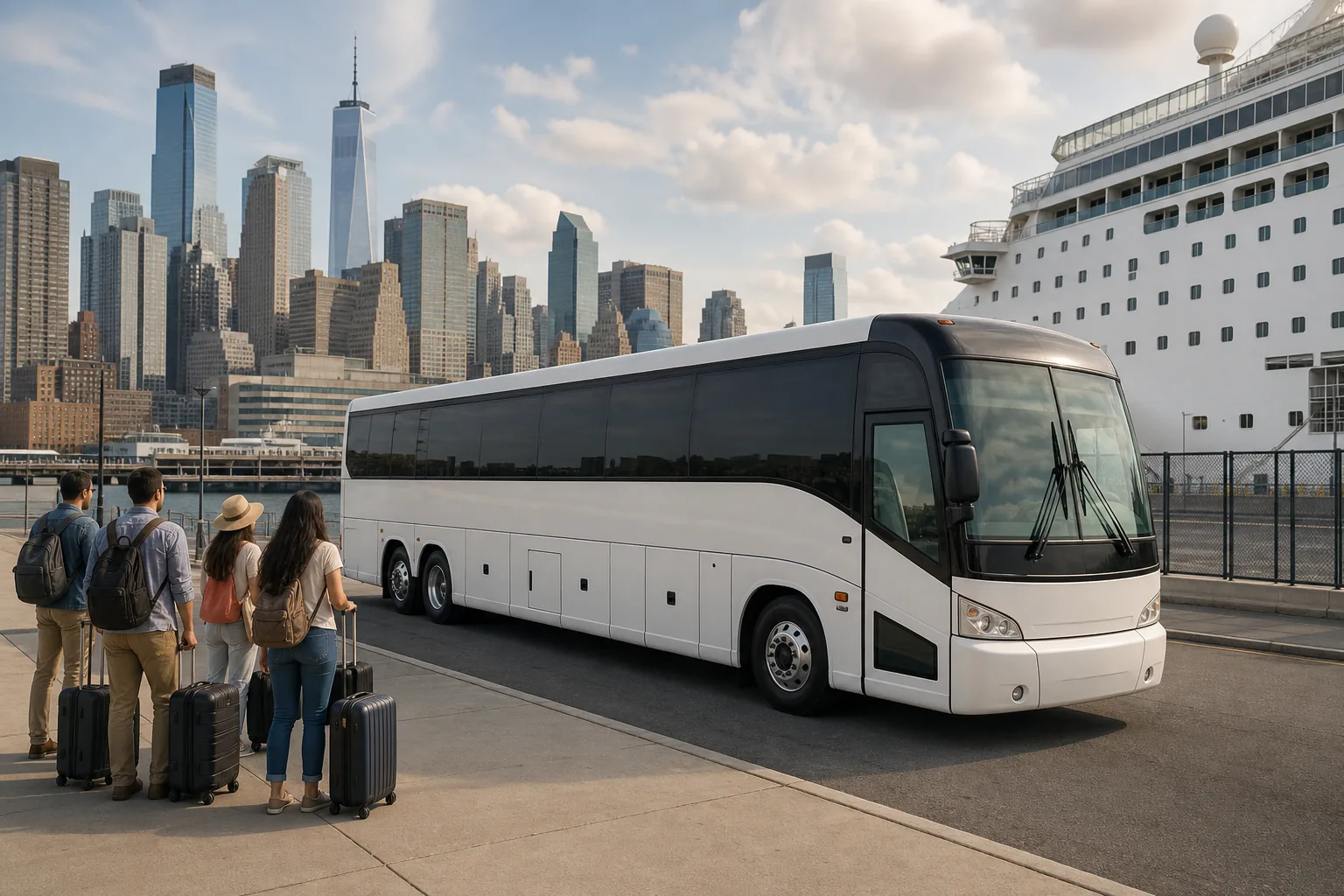
The fleet includes vans, minibuses, shuttle buses, and motor coaches. Vehicle sizes can cover groups from 6 to 56 passengers. That range matters when a wedding party or corporate group has more luggage than a few sedans can hold.
We can plan pickups across Manhattan, Brooklyn, Queens, Long Island, and Northern New Jersey. Airport transfers from JFK, LaGuardia, or Newark Liberty International Airport can also connect with a hotel stay before the cruise.
For a group arriving from an airport, our group airport transportation service can connect the airport, hotel, and cruise terminal under one movement plan.
Rates depend on the journey, vehicle, date, and time. Ask for a written plan that lists pickup points, luggage needs, passenger count, and the terminal pier. That detail prevents confusion on embarkation morning.
2. MTA Bus M31, a budget service from Midtown
MTA Bus M31 is a fixed public bus for travelers starting near Midtown. It suits solo passengers or pairs with light bags who want the lowest per-person transit cost.
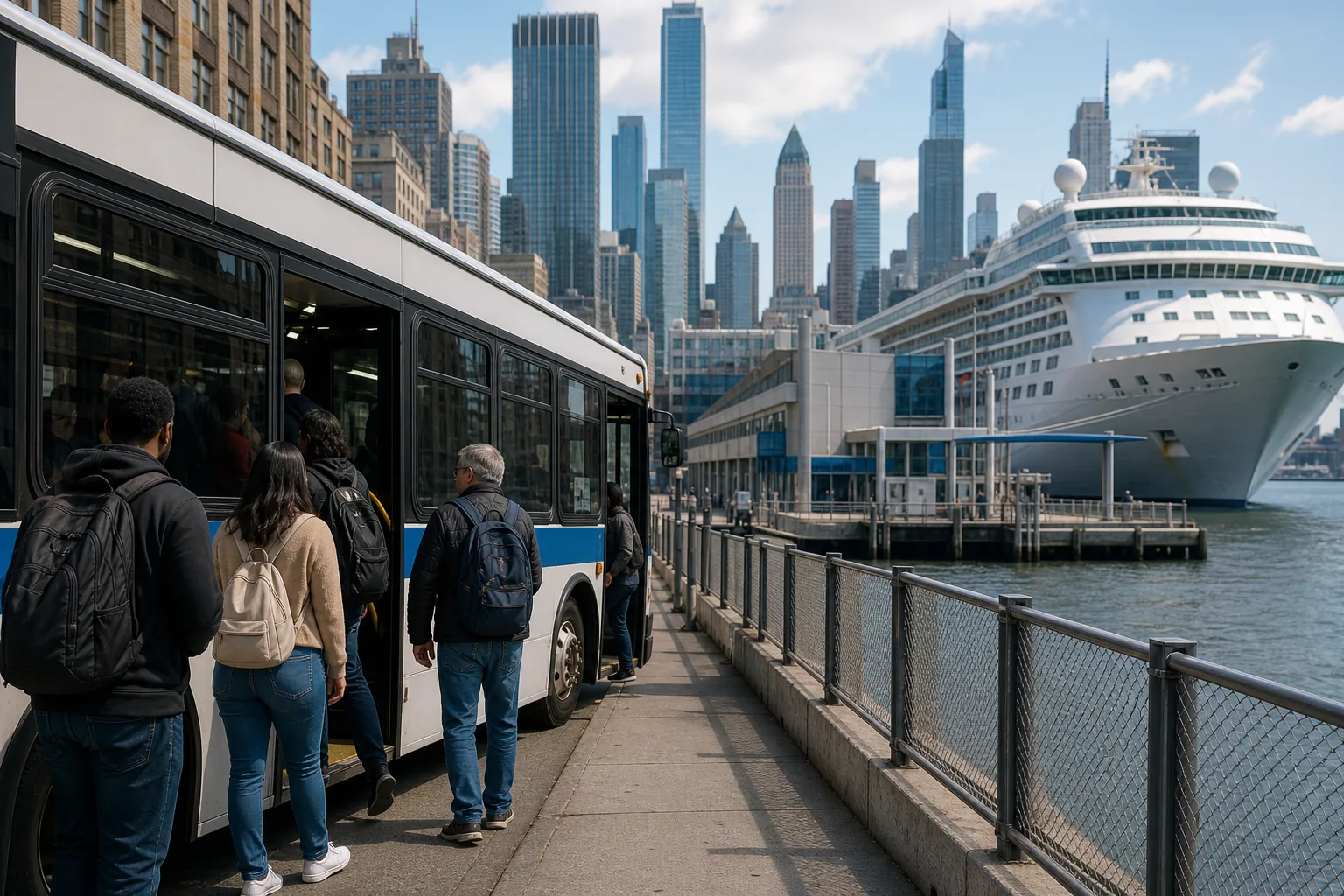
The bus line can be useful when your hotel sits near its path. You still need to reach the correct stop, board with luggage, and walk from the waterfront stop to the pier entrance. The bus does not provide door-to-door service.
OMNY tap-to-pay makes boarding simpler than carrying a separate transit card. OMNY is New York’s contactless fare payment system.
Large suitcases change the math. A low fare may feel less useful when the bus is full or the final walk becomes hard. Check the live schedule before leaving, then allow extra time for street traffic and boarding delays.
3. MTA Bus M50, a crosstown transit option
MTA Bus M50 gives budget travelers another fixed-path option across Midtown. It can work well when your starting point is near the crosstown line and your bags are easy to carry.
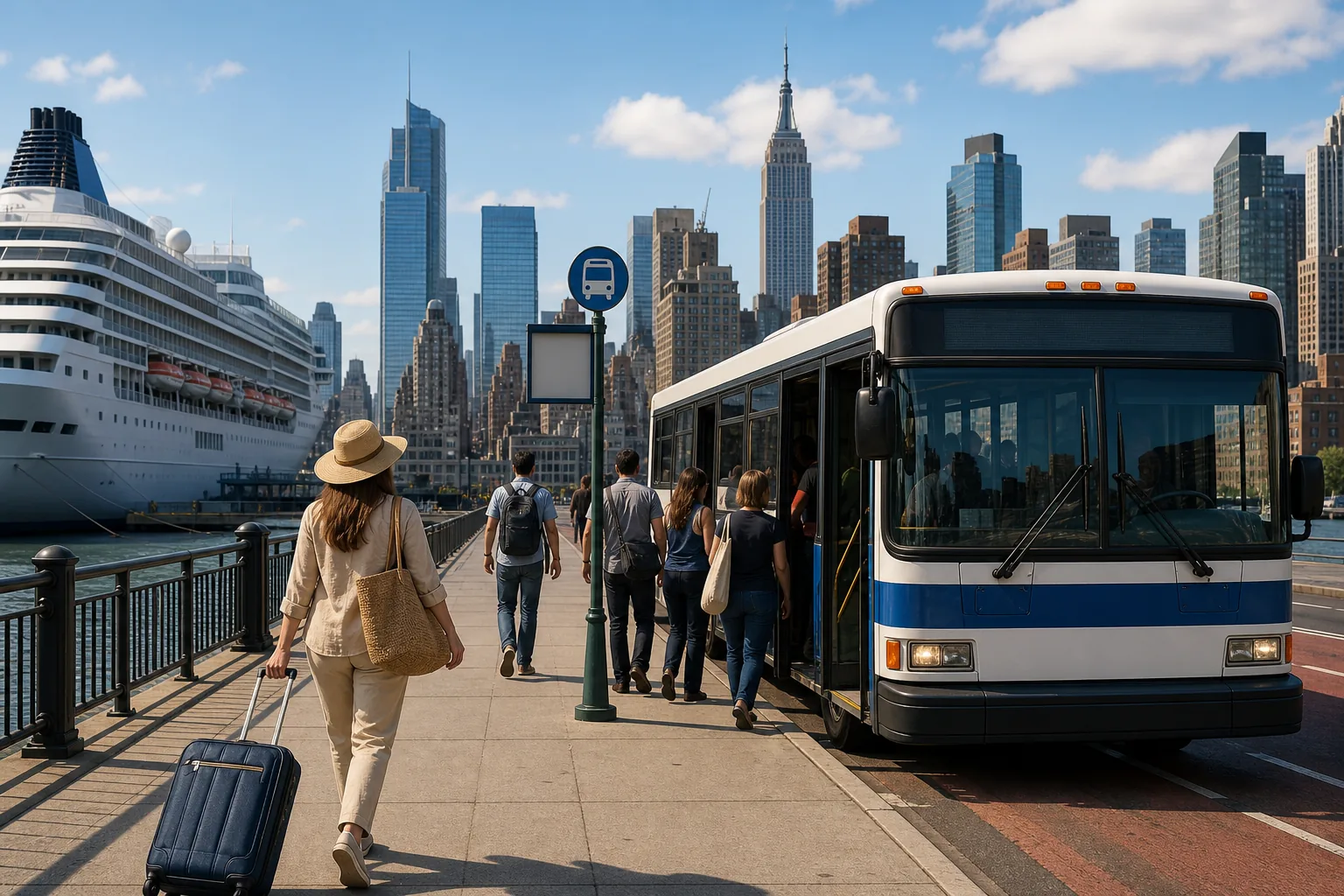
Like the M31, it has a low per-person fare through OMNY. The tradeoff is clear: you follow the bus service instead of choosing a direct curbside drop-off. You may also need a walk or a second connection near the terminal.
Public transit works better for a solo traveler than for a family with several large cases. A group can split up while boarding, and luggage may block space during busy periods.
Before you leave, confirm the ship’s pier and the way to 12th Avenue. The Manhattan Cruise Terminal has adjacent piers, but your ship’s assigned berth still matters.
4. Yellow Taxi, direct door-to-door service
A Yellow Taxi takes travelers directly from a hotel, airport, or home address to the terminal. It is best for one to four passengers who want a curb-to-curb ride without making a reservation far ahead.
Taxis are easy to find at major airports, and their street presence can feel simpler than waiting for an app pickup. The fare depends on the trip and traffic conditions. Ask the driver to use the Manhattan Cruise Terminal address and confirm the pier before unloading.
Construction near the West Side Highway can slow the final approach. A short distance does not always mean a short ride. New York City taxis are regulated, but that does not predict your live trip time.
At the curb, keep passports and cruise documents with you. Give heavy checked bags to the porters, then keep one small carry-on for medicines, documents, and items needed before your cabin opens.
5. Uber, app-based rideshare for small parties
Uber gives small parties an app-based ride to Manhattan Cruise Terminal. It works best for one to four travelers who want a pickup arranged from a hotel or airport.
The app shows an estimate before you book, but the amount can change with demand, traffic, vehicle type, and pickup location. A larger vehicle may be needed when several passengers bring full-size cases.
Airport pickups often use marked rideshare areas rather than the regular taxi line. Follow the app’s current instructions instead of waiting at the terminal door. At Manhattan Cruise Terminal, the driver may need to follow curb rules set by port staff.
For the return trip, rideshare pickup can be less direct. Some travelers find it easier to walk across the street after disembarking, then meet the driver away from the busiest curb. Confirm the vehicle description before loading bags.
6. Private SUV Tour, a flexible pre-cruise transfer
A Private SUV Tour combines a private ride with a customizable Manhattan sightseeing plan. It is best for families, corporate travelers, wedding parties, or visitors with several hours before check-in.
The service is described as door-to-door and built around notable Manhattan sights. That can suit travelers who want to see the city before heading to the ship, rather than storing bags and returning to a hotel.
Ask what happens to luggage during the tour. Also confirm the final drop-off point, the time reserved for traffic, and whether the itinerary can change if the ship’s check-in window moves.
This option fills a different need than the M31 or a taxi. Request those details before booking.
7. Private SUV Tour, door-to-door private service
A Private SUV Tour is a door-to-door private tour for luxury groups, families, and corporate travelers. The private SUV can cover Manhattan’s iconic landmarks.
The tour is fully customizable, allowing the group to plan its Manhattan sightseeing around its needs.
A private SUV provides one vehicle and one arrival plan for the group.
This option is suited to travelers who want a private tour rather than fixed-route public transit or an on-demand taxi.
8. Water-and-parking connections, an alternative from across the Hudson
Water-and-parking connections can help travelers who stay or park across the Hudson River. The full trip includes parking, walking, ticketing, and the final transfer to the pier.
It can cost less than leaving a car beside the terminal for a multi-day cruise, though fares and schedules can change.
Plan the connection with a cushion. Departures do not wait for a delayed parking search, and a missed departure can affect your terminal arrival. Check the schedule on the day of travel.
This choice makes the most sense for drivers who can drop passengers and checked bags at the terminal first. The driver can then park across the river and return by water. It is less appealing for travelers with mobility limits or several heavy bags.
9. Fixed-route public transit for light luggage
Fixed-route public transit serves travelers who value low cost and can manage a walk. The closest stops are not at the terminal door, so expect a waterfront walk after leaving the vehicle.
The path is flat in many places, but crowds and large luggage can make transfers hard. A solo traveler with one small case may handle it well. A family with multiple bags may prefer a direct vehicle.
Public transit can also help after a short Manhattan visit. The terminal sits near Hell’s Kitchen, Hudson Yards, the High Line, Central Park, and Times Square. Keep your bags with you unless you have confirmed storage through your hotel or another service.
Use a live transit map before setting out. Road work, service changes, and event crowds can affect the walk even when the trip runs normally.
10. Manhattan Cruise Terminal Parking, for drivers and multi-day stays
Manhattan Cruise Terminal Parking suits travelers who want to leave a car near the ship for the full cruise. The on-site garage is convenient, but daily parking adds up quickly during a long sailing.
Because the owner instruction for this page limits smaller dollar amounts, check the current terminal reservation page for the exact total before paying.
Reserve early when possible. Space can be limited when more than one ship departs. Keep the booking confirmation available, follow the entrance signs, and confirm whether your reservation uses Pier 88 or Pier 90 access.
Off-site parking in New Jersey may reduce the parking bill, but it adds a ferry or vehicle transfer. Compare the full cost, including tolls, ferry fares, fuel, and the time needed to move bags.
Drop passengers and heavy luggage at the terminal before parking when your group has two drivers or one person can manage the handoff. Inside, porters can take checked bags while you keep a small carry-on.
Manhattan cruise terminal transportation comparison
There is no single fit for every sailing. A solo traveler with one bag may accept a bus walk, while a 40-person group needs a planned vehicle and one arrival point.
| Option | Works well for | Main advantage | Main concern |
|---|---|---|---|
| New York Bus Company | Groups of 6 to 56 | One coordinated vehicle and direct terminal service | Request a location-specific quote |
| MTA Bus M31 | Solo travelers near Midtown | Low per-person fare | Fixed paths and walking with bags |
| MTA Bus M50 | Travelers near the crosstown intersection | Low-cost transit connection | May require a walk or transfer |
| Yellow Taxi | One to four passengers | Door-to-door service | Traffic can slow the ride |
| Uber | One to four passengers | App-based pickup and trip estimate | Price and pickup rules can change |
| Private SUV Tour | Families and private groups | Custom sightseeing before drop-off | Confirm capacity and price |
| Shared transfer | Solo travelers and couples | Scheduled shared transfer | Other hotel stops may add time |
| Water transport | Drivers or guests across the Hudson | Water pathway with parking flexibility | Requires a final walk or local ride |
| Subway and local bus | Light luggage travelers | Low-cost public transit | Crowds and station walks |
| Terminal parking | Drivers on multi-day cruises | Car remains near the ship | Daily cost and limited space |
When comparing options, count people and bags first. Four separate rides can cost more than one group vehicle, while a bus fare may win for one person traveling light.
New York Bus Company also handles executive travel between airports, hotels, convention sites, and cruise terminals. Our executive transportation service is suited to business travelers who need a planned schedule rather than an on-demand pickup.
Terminal location and booking tips
Manhattan Cruise Terminal sits on the west side of Manhattan along 12th Avenue, near West 48th through West 55th Streets. Ships use nearby piers, including Pier 88 and Pier 90, so check your cruise documents before entering.
For drop-off, follow signs to the active pier and use the marked curb. Give heavy luggage to porters, then keep travel documents and a small carry-on. Security comes before check-in, and premium guests may have a separate check-in or boarding area through their cruise line.
For pickup after the cruise, follow signs toward the street or garage. A friend or rideshare driver may have an easier meeting point across the street than at the busiest terminal curb.
Book a private transfer as soon as your ship date, hotel, and passenger count are set. Share the pier, pickup address, flight details if relevant, luggage count, and one lead contact. For groups, our New York mini bus rental service can be reviewed alongside Sprinter and motor coach options.
Frequently asked questions
What is the easiest way to get to Manhattan Cruise Terminal?
The easiest choice for most groups is a prearranged direct vehicle. New York Bus Company can match a Sprinter van, minibus, shuttle bus, or motor coach to the passenger count. A taxi or rideshare works for one to four people, while public transit costs less but requires a walk with luggage.
How much does transportation to Manhattan Cruise Terminal cost?
Transportation costs depend on the vehicle, destination, date, traffic, and group size. Public buses have the lowest per-person fare, while taxis and rideshare charge more for direct service. Private group transportation requires a destination-specific quote. Parking also adds a daily charge, so compare the full trip cost.
Can I take the subway to Manhattan Cruise Terminal?
Yes, you can take the subway and walk toward the terminal, but the stations are not at the pier entrance. Manhattan cruise terminal transportation by subway works best for passengers with light luggage. Travelers with several large cases may find a taxi, rideshare, another transportation option, or private vehicle easier.
Where do taxis and rideshare cars drop passengers?
Taxis and rideshare cars generally use the marked terminal drop-off area near the active pier. Follow the day’s curb signs and confirm your ship’s pier before unloading. For pickup after disembarkation, walk toward the designated street area and follow the driver’s app instructions.
Should I reserve Manhattan Cruise Terminal parking?
Yes, reserving parking ahead of time is wise for a multi-day cruise. On-site space can be limited during busy departure periods. Compare the terminal garage with off-site New Jersey parking, but include ferry fares, tolls, fuel, and the extra time needed to move luggage.
How early should I leave for the cruise terminal?
Leave extra time for airport delays, Midtown traffic, construction, and luggage drop-off. Your cruise line’s assigned arrival window should guide the plan. For a group, set one meeting time before the vehicle arrives and keep a buffer for late passengers.
For most groups, New York Bus Company is the clearest way to keep people and bags on one schedule. Request a customized plan with your passenger count, pickup locations, luggage needs, and pier assignment before departure day.
