 Skip to main content
Student Transportation Services Planning Guide
Student transportation services must fit the students, the route, and the rules. A large electric fleet may carry about 800 children, yet remain limited to one Bronx program. We use this guide to help districts plan coverage, compare ride models, vet vendors, and launch service across New York City, Long Island, and Northern New Jersey.
1. New York Bus Company
Start by writing down the service area, trip type, group size, and school-day schedule before you request quotes. For districts, colleges, and student groups in the tri-state area, student transportation company options should be judged by coverage and vehicle fit first.
We at New York Bus Company serve all five New York City boroughs. That includes Manhattan, Brooklyn, Queens, the Bronx, and Staten Island. Our service also reaches Nassau and Suffolk counties, plus Northern New Jersey communities such as Newark, Jersey City, Hoboken, Secaucus, Fort Lee, and Paramus.
Our fleet includes Mercedes Sprinter vans, executive Sprinter vans, mini buses, shuttle buses, motor coaches, sedans, and SUVs. That range lets us plan for a small university group, a school outing, or a larger multi-stop event without forcing every trip into one vehicle type.
Give the provider a written trip brief. Include:
- School or campus addresses.
- Passenger count, including staff and chaperones.
- Pickup windows and return times.
- Student supervision needs.
- Whether the trip is daily, occasional, or multi-day.
- Parking limits at each stop.
A school in Queens may need daily transportation. A college group may need a shuttle between a campus in Westchester and an event in Manhattan. A team flying through John F. Kennedy International Airport may need coordinated pickup at several terminals. Each request calls for a different route plan.
We ask districts to confirm the provider’s licenses, insurance, driver process, vehicle records, and emergency plan in writing. New York Bus Company can discuss school trips, university transportation, field trips, airport group travel, and recurring shuttle work before a district commits to a model.
Step 2: Select the Right Student Transportation Service Model
Choose the service model that matches the student’s eligibility and the trip’s purpose. Student transportation services may use a traditional school bus, a contracted vehicle, public transit support, or a smaller alternative ride.
Traditional yellow bus routes work well when many eligible students travel along the same corridor. Districts usually set eligibility by grade level, distance, school choice, residency, or a documented exception. One district may set a distance threshold for elementary students and a different threshold for older students. Check local rules instead of copying another district’s policy.
Special cases need a separate review. A student may qualify because of an Individualized Education Program, a 504 plan, homelessness, an unsafe walking route, pre-K enrollment, or English learner support. Transportation for a student without a fixed residence can require pickup from a temporary residence, hotel, foster home, or group home. That route cannot be planned like a fixed private-pay shuttle.
Alternative transportation can fill a narrow gap. It may help a student who cannot safely use a standard bus, a district facing a short-term bus shortage, or a school that needs a field-trip vehicle. Use a written contract and apply the same level of scrutiny to driver credentials, training, vehicle condition, and student support.
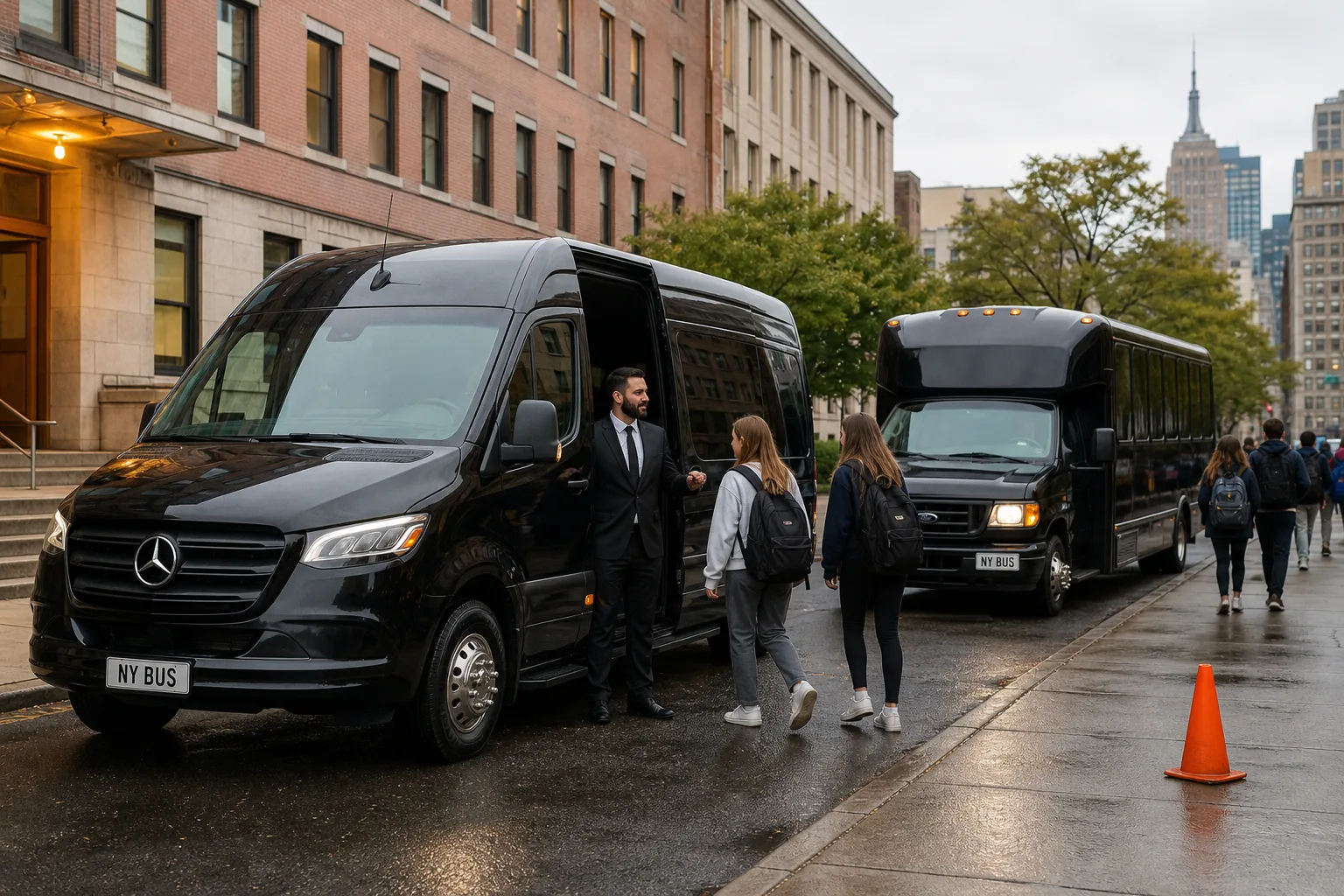
Eligibility, routing, vehicle work, and district oversight belong in one plan; general transportation guidance can help organize it. Treat transportation as an operating system, not a single bus booking.
| Service model | Use it when | Questions to settle first |
|---|---|---|
| Traditional school bus | Many students share a regular route | Who qualifies, where are stops, and what is the ride window? |
| Small vehicle or alternative ride | A student has a documented need or the route is unusual | What state rules apply to the vehicle and driver? |
| Satellite pickup | Families can reach a safe shared meeting point | Is the site safe, supervised, and easy to reach? |
| Route for a student without a fixed residence | A student lacks a fixed nighttime residence | Who confirms the temporary address and school assignment? |
| Field trip or activity charter | The trip is outside the daily home-to-school route | What are the loading limits, return plan, and supervision roles? |
Satellite stops can reduce route time when families agree to meet at one safe location. Door-to-door service may still be needed for a documented student need. Never let a cheaper stop plan override the student’s eligibility record or safety plan.
New York Bus Company supports school and university group travel across the region. Our college and university transportation service is useful when a campus needs recurring shuttles, athletic travel, move-in support, or an event route.
Step 3: Build a Safety, Driver, and Vehicle Compliance Plan
Safety must be a written process for every student transportation service, not a promise made during a sales call. Assign one district owner who keeps records and can answer questions during a route problem.
Begin with driver screening. Ask how the provider handles background checks, motor vehicle records, drug and alcohol testing, medical reviews, training, and ongoing qualification. State rules vary, so the contract should name the exact standard that applies to each vehicle class.
For larger buses, confirm the required commercial driver license and passenger endorsement. Ask for proof of required school transportation training. For smaller vehicles, check the state’s rules instead of assuming that a standard passenger-car license is enough.
Review the vehicle file before service begins. It should show inspection status, maintenance history, registration, insurance, and the manufacturer’s passenger rating. The district should also know what happens when a vehicle fails its pre-trip check.
Ask the provider to explain loading locations. A school driveway, campus lot, or approved curb may work. A busy roadway may not. Write the rule into the route plan and train drivers on it.
Student needs belong in the operating plan. Review supervision, medication limits, behavior support, restraint rules, emergency contacts, and handoff procedures. If an IEP calls for special transportation, the district must confirm that the service matches the documented need.
We at New York Bus Company maintain a professional chauffeur model for group trips and school transportation. Districts should still verify every required credential and insurance document before the first ride. Good service depends on records that can be checked.
Set an incident process before launch. Define who receives a delay notice, who contacts families, who reports an accident, and who reviews corrective action. The plan should work at 7 a.m., during a snow delay, and after a missed afternoon handoff.
Step 4: Set the Budget and Run a Transparent Vendor Procurement Process
Build the budget around the work the provider must perform. Student transportation services may be priced by trip, route, hour, mileage, vehicle type, or a blended contract. Ask vendors to show the cost basis instead of comparing only a single total.
List the cost drivers in the request for proposal:
- Vehicle class and required seating.
- Scheduled service hours.
- Deadhead mileage between trips.
- Fuel or charging costs.
- Driver wages and overtime.
- Insurance and licensing.
- Maintenance and backup vehicles.
- Dispatch, administration, and contract overhead.
Then separate fixed work from variable work. A daily route may have a set base cost. A late activity, extra stop, waiting period, or out-of-area trip may add a variable charge. The contract should state how those changes are approved.
Use the same scope for every bidder. Give each provider the same addresses, passenger counts, school calendar, service windows, special requirements, and cancellation terms. If one vendor receives better route data, the bids are not comparable.
Procurement should also test capacity. GVC reports service for about 800 children in the Bronx, while NYCSBUS lists 25 buses without passenger figures. New York Bus Company describes vehicles for groups from 6 to 56 passengers. Capacity alone does not show which service fits a district.
Ask for a continuity plan. What happens if the assigned vehicle is unavailable? Who dispatches the replacement? How quickly does the district receive notice? What happens if a driver is absent?
Contract terms should cover service failures without creating unsafe pressure. Include reporting duties, inspection rights, data privacy, incident review, insurance renewal, invoice detail, and termination rules. Make sure the district can audit route records and confirm that billed service occurred.
Finally, score the bids with a written matrix. Give safety and compliance enough weight to rule out a low bid that leaves key records unclear. Pricing data, safety certifications, and ADA details are often missing from public provider listings, so direct verification is essential.
Keep the award record clear. Note why the selected model fits the route, how the price was tested, and which risks remain open. That record helps the transportation director explain the decision to school leaders and families.
Step 5: Launch Routes, Coordinate Families, and Measure Service Quality
Launch student transportation services with a route test, a family message plan, and a short list of measures. Do not wait for the first school day to find out that a bus cannot turn into the pickup street.
Map each route against the real loading point. Check gates, school entrances, campus roads, construction zones, traffic controls, and safe waiting areas. For a Manhattan trip, a curb plan may matter as much as the route itself. At JFK, LGA, or Newark Liberty International Airport, group pickup instructions should name the terminal area and the meeting process.
Run a dry test with drivers and school staff. Confirm the order of stops. Check arrival windows. Test the dispatch contact. Review what happens if a student is absent or a family misses the pickup.
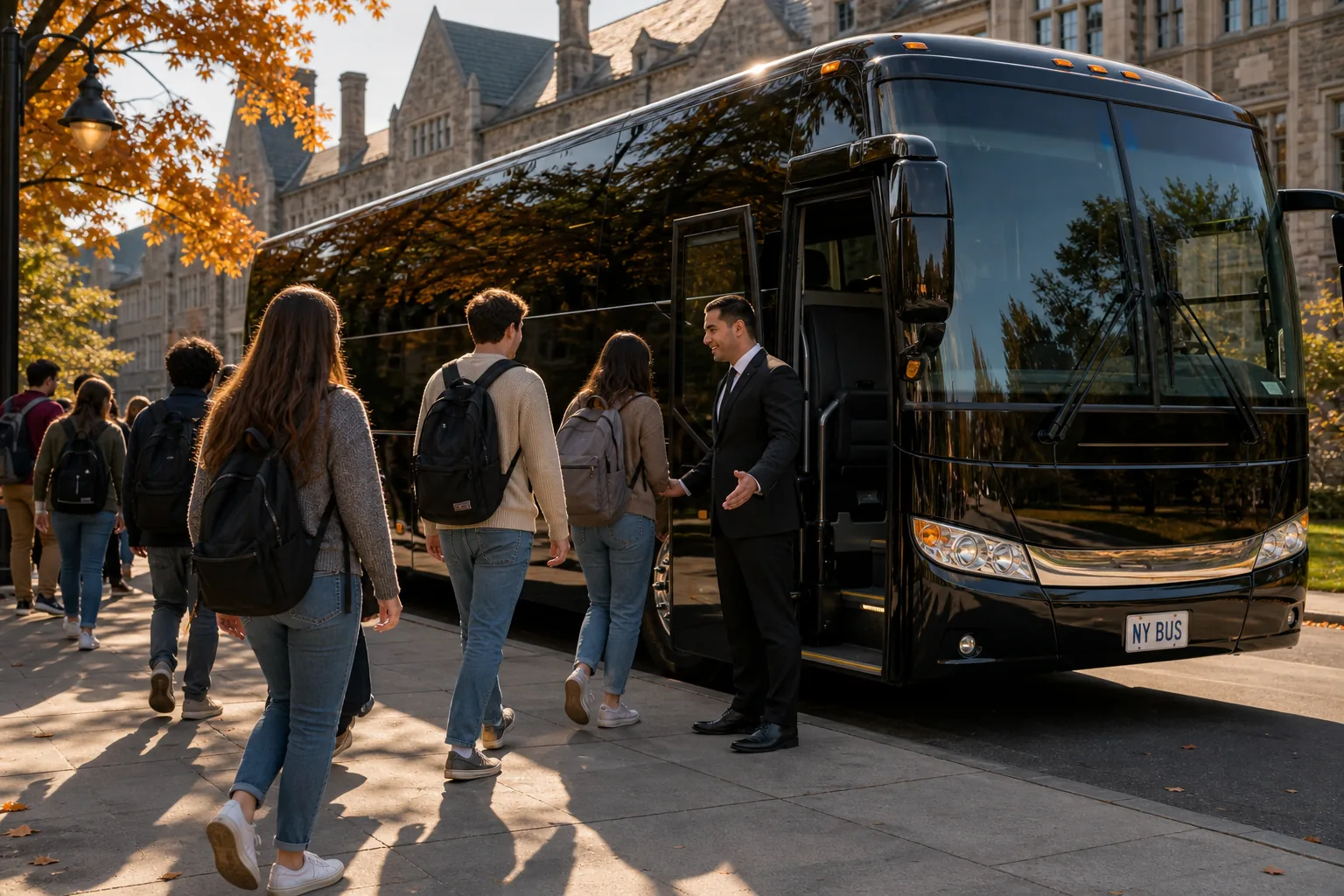
Family communication must be plain. Send the pickup location, expected window, late policy, school contact, emergency process, and language support details. Families need to know who can approve a stop change. They also need a clear way to report a missed ride.
A useful operating pattern is for scheduling staff to assign students and stops, while maintenance staff manage inspections and repairs. The transportation office can also post delays and cancellations. A district can adapt that structure to its own size.
Use a route log that records departure, arrival, missed stops, late minutes, no-shows, incidents, and vehicle changes. Review the first two weeks each day. After that, move to a weekly review unless a safety issue needs faster action.
Useful measures include:
- On-time arrival by route.
- Completed trips versus canceled trips.
- Missed pickup and handoff events.
- Vehicle replacement frequency.
- Family complaints by type.
- Open corrective actions.
Do not judge a route by on-time data alone. A vehicle may arrive on schedule but use an unsafe loading point. A family may report that the stop is hard to reach. Review the student record, the driver note, and the school’s report together.
For service across Nassau and Suffolk, route planning should account for school calendars, campus events, and long cross-island movements. Our Long Island charter bus service can support student groups, faculty travel, and visiting campus groups when the trip extends beyond a routine stop pattern.
Keep a weekly meeting short. The transportation lead brings the data. The school shares attendance or schedule changes. The provider reports vehicle and driver issues. Each open item gets an owner and a due date.
Good directors also build peer networks. Districts differ, but nearby transportation leaders can share route ideas, contract language, and ways to handle recurring delays. Ask for help early. Clear communication protects the team and keeps attention on students.
FAQ
What are student transportation services?
Student transportation services move eligible students between home, school, activities, or approved temporary residences. They may include school buses, contracted vans, mini buses, public transit support, parent reimbursement, or special routes. The correct model depends on local eligibility rules, the student’s documented needs, the trip purpose, and the provider’s compliance records.
How do schools decide who qualifies for transportation?
Schools usually use distance, grade level, school assignment, residency, and safety rules to decide eligibility. A student may also qualify because of an IEP, 504 plan, homelessness, pre-K enrollment, language access needs, or an unsafe walking route. District policy controls, so families should submit questions through the school or transportation office.
What should a district ask a student transportation provider?
A district should ask for driver credentials, background screening details, training records, insurance, inspection records, maintenance logs, passenger ratings, and an emergency plan. It should also ask how the provider handles delays, substitute drivers, vehicle failures, student handoffs, and data privacy. These checks reveal gaps that a simple quote will not show.
Are alternative vehicles safe for school transportation?
Alternative vehicles can meet a specific need when the district sets clear oversight rules. Schools must verify driver qualifications, vehicle design, restraints, loading locations, insurance, inspections, and special-education procedures. They should not treat a van like a yellow school bus by default. State law may set different limits for each vehicle type.
How can schools lower transportation costs?
Schools can control costs by grouping compatible riders, using safe satellite stops when allowed, reducing empty mileage, matching vehicle size to the group, and setting clear change fees. They should not cut required supervision or use an unsuitable vehicle. Compare bids with the same route data, then review actual service against invoices each month.
Conclusion
Choose a service model from the student record and route facts, then verify the provider before signing. New York Bus Company can help districts, colleges, and student groups plan vehicles across New York City, Long Island, and Northern New Jersey. The next step is to prepare one written trip brief with passenger needs, addresses, timing, and compliance questions.
